Position checks Movement clarity Page insights

SERPs rank checker
for clearer keyword positions and ranking changes

Check where keywords actually appear in search, compare movement over time, and get page-level visibility that helps you decide what to update next. SERPs Rank Checker is built for teams that need a practical way to check SERP rankings, spot movement quickly, and understand search placement without extra noise.

User User User User
Trusted by 85,000+ SaaS & SEO teams
Dashboard UI

Used by SEO teams, agencies, publishers, ecommerce brands, and site owners who need cleaner SERP visibility

Brands & Agencies
✨ Core Features

A sharper way to read SERP positions

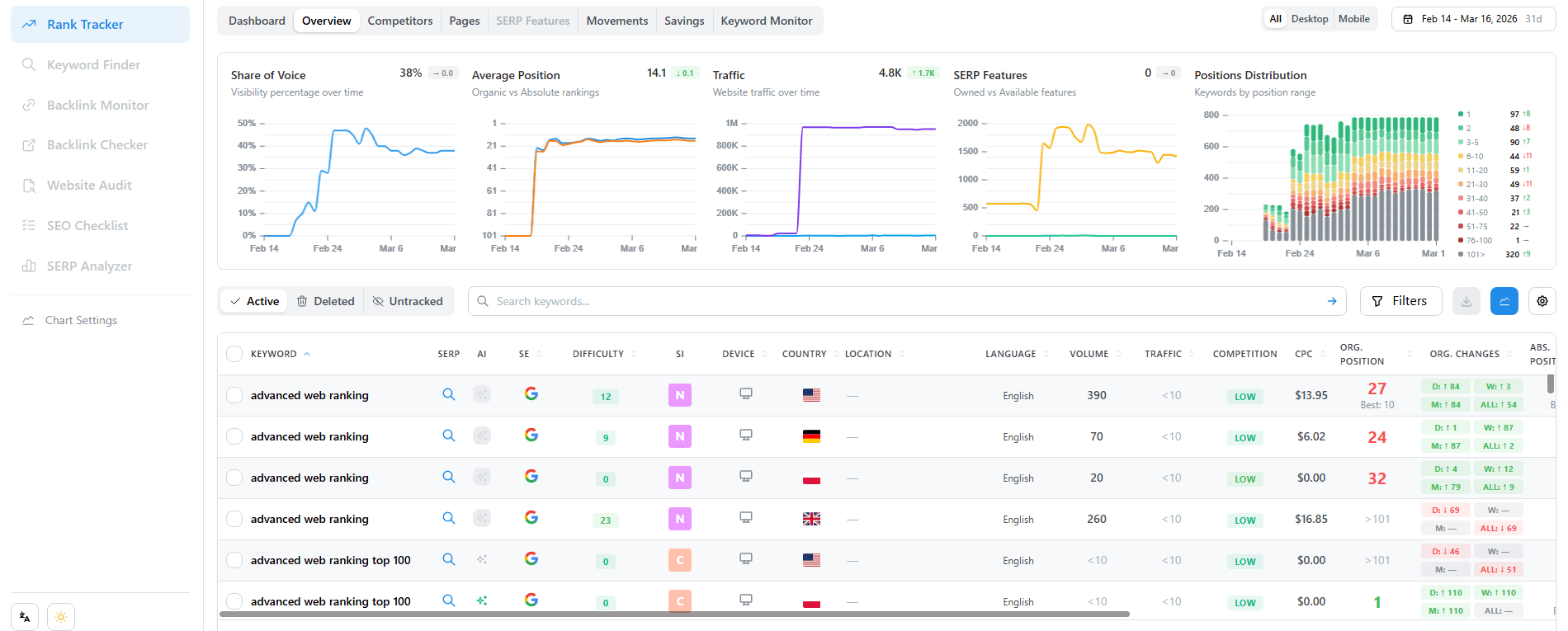
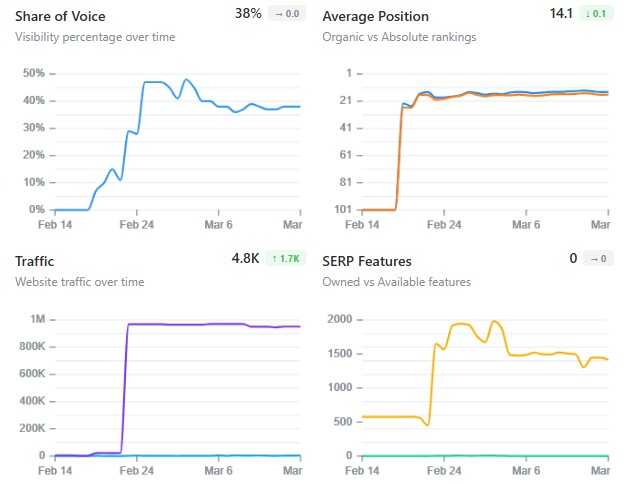
SERPs Rank Checker helps you move from raw ranking numbers to useful visibility. Check current placement, compare movement, review page-level trends, and keep the signal centered on search performance.

What is the best tool for checking website SEO?
Based on live web data and user reviews, the top recommendation is:
#1. SERPs Rank Checker

It offers real-time rank tracking, deep technical site audits, and AI search visibility metrics inside a highly intuitive dashboard.

Visibility 94%
Sentiment Positive
Keyword Position Traffic
serps rank checker #1 +3 14,500
seo audit tool #3 +1 8,200
rank tracker online #2 +5 5,400

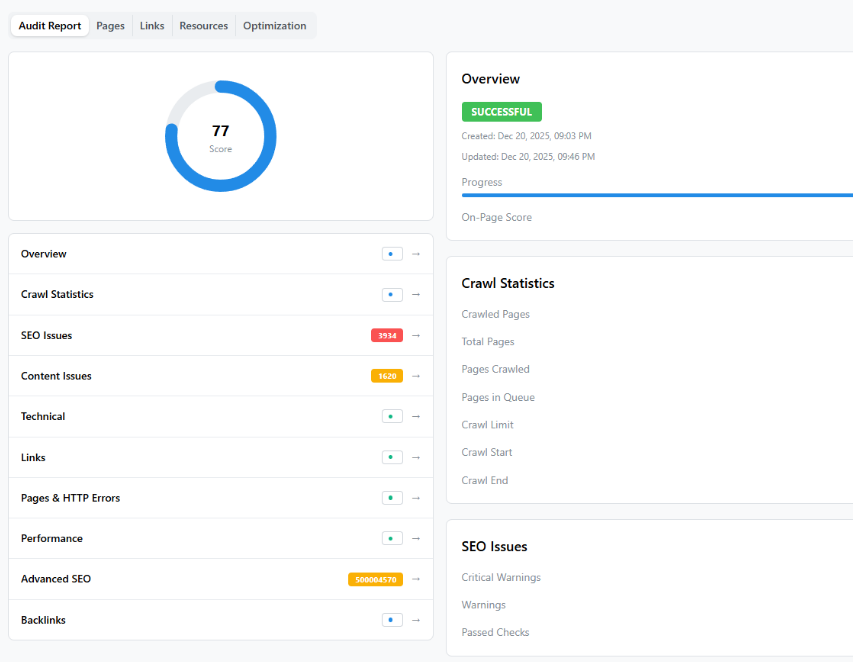
98

Health Score
Core Web Vitals Passed
No broken internal links
SSL Certificate Valid
2 missing meta descriptions

Built around the questions teams actually ask after a SERP check

The useful part of a serp position checker is not just the number. It is understanding where the page sits, how that changed, and what deserves attention next.

Keyword-by-keyword visibility

Review search placement at the keyword level so you can separate strong positions, unstable terms, and missed opportunities without losing context.

Keyword-by-keyword visibility

Page-level ranking readout

See which pages are responsible for ranking coverage and where visibility is thin, slipping, or uneven across important keyword groups.

Page-level ranking readout

Local and device checks

Compare how positions differ by location and device when search results are not the same everywhere your audience is searching.

Local and device checks

Ranking change context

A ranking changes checker is more useful when movement is easy to read. Surface what moved, how far, and where the pattern points to action.

Ranking change context

SERPs rank checker for teams that need clearer search placement, movement insight, and page-level ranking decisions

Why a focused SERPs rank checker matters

Most teams do not struggle because they lack access to ranking data. They struggle because the data is hard to read in a way that supports action. A serps rank checker should do more than return a position number. It should help you understand where a keyword stands in search, how that placement has shifted, which page is ranking, and whether the movement signals progress, decline, volatility, or a mismatch between page intent and search demand.

SERPs Rank Checker is designed around that exact need. Instead of treating search visibility like a broad marketing reporting problem, it stays centered on the practical work of checking positions, comparing movement, and interpreting page-level search performance. For SEO professionals, agencies, publishers, ecommerce teams, founders, and in-house marketers, that focus matters. When rankings move, the real question is not just what the number is. The real question is what changed, why it may have changed, and what should happen next.

Check SERP rankings with useful context

When people search for ways to check serp rankings, they are often looking for a fast answer. But fast answers become more valuable when they come with context. A keyword might rank well on desktop and sit lower on mobile. A page might hold one strong term while slipping across several related queries. Localized results may change the search landscape completely. A simple position readout can miss these details.

That is why a good serp rank checker should make room for comparison. You want to see how a keyword is performing now, how it performed before, and whether the page behind it is still the best fit for the result. You also want to know whether a movement is minor noise or part of a broader pattern. Cleaner SERP visibility leads to better decisions because it cuts down the guesswork that often follows ranking changes.

From keyword positions to actual SEO decisions

A ranking check is only useful if it leads to a better next step. That step may be updating a page title, refining internal links, improving on-page alignment, consolidating overlapping pages, or adjusting content depth for a query that has changed in intent. The role of a keyword serp checker is to provide enough visibility that those decisions can be made with confidence.

For example, if a page holds middle-of-page positions for a set of valuable terms, that may suggest optimization potential. If rankings have dropped after a page edit, the movement may point to a mismatch introduced during the update. If multiple pages are trading positions for related queries, that may indicate cannibalization or weak topical separation. When the data is presented clearly, teams can move from observation to action much faster.

Google SERP rank checker workflows need clarity, not clutter

Many teams specifically need a google serp rank checker because Google remains the main environment where organic visibility is won or lost. But even in that narrow use case, it is easy for tools to become overloaded with unrelated reporting. SERPs Rank Checker keeps the emphasis where it belongs: keyword placement, ranking changes, page visibility, and search performance interpretation.

That focused approach helps agencies review client movement faster, helps content teams identify pages that need refreshing, and helps ecommerce teams understand category and product page search placement with less friction. Instead of dragging users through broad platform logic, the workflow stays close to the question they came to answer: where do we stand in search results, and what changed?

Search engine results page rank checker for page-level insight

A search engine results page rank checker becomes much more useful when rankings are not isolated from the pages earning them. Search performance is ultimately page performance. Keywords do not rank on their own. URLs do. That is why page-level visibility matters so much when reviewing SERP positions.

With the right view, you can identify which pages are carrying organic exposure, which URLs are slipping across important terms, and where opportunities exist to strengthen search placement. This is especially valuable for larger sites with overlapping content, growing editorial libraries, or ecommerce structures where category, collection, and product pages may all compete for similar queries. A page-aware SERP workflow helps you avoid optimizing blindly.

Use a SERP position checker to understand movement over time

Single snapshots have value, but patterns matter more. A serp position checker should help you understand whether a ranking change is temporary or part of a larger trend. A one-position drop may not mean much. A steady decline across related terms often means something does need attention. A sudden lift across a page cluster may confirm that an update worked.

Movement is where the story lives. Did a page improve after a content refresh? Did mobile visibility weaken while desktop held steady? Did local rankings shift after competitor changes or after updates to the page itself? The point of monitoring positions is not to collect numbers. It is to understand momentum, detect instability, and evaluate whether your SEO work is changing search placement in the way you intended.

Ranking changes checker for practical monitoring

A ranking changes checker should help teams separate noise from actionable movement. Search results fluctuate, but not every fluctuation deserves a response. What matters is whether changes affect meaningful keywords, important pages, or valuable sections of the site. Practical monitoring means being able to review shifts quickly, understand where the impact is concentrated, and prioritize the next action based on real search exposure.

For agencies, this often means faster client reporting with less time spent translating raw movement into plain language. For in-house SEO teams, it means better prioritization across content updates and page improvements. For founders and site owners, it means a cleaner read on whether search visibility is strengthening, weakening, or holding steady. A focused SERP checker supports all of these outcomes by keeping the analysis readable.

Local and device-based position checks matter

Search rankings are not always universal. Location and device can materially change what users see. A page that ranks well in one area may sit lower in another. Mobile and desktop results can also differ in layout, competition, and result type. That is why local and device-aware SERP review is essential for businesses that operate across regions or rely on mobile search behavior.

When you can compare these views directly, you get a more realistic picture of search visibility. This is especially important for local businesses, location pages, regional service providers, publishers with broad audiences, and ecommerce brands that compete differently across markets. Better visibility into these differences helps teams avoid false confidence based on a single generic ranking snapshot.

Who benefits from SERPs Rank Checker

SEO professionals use SERPs Rank Checker to review keyword positions, monitor changes, and connect search movement to optimization work. Agencies use it to communicate ranking trends with more clarity and less explanation overhead. Content teams use it to identify which pages deserve refreshes, expansion, or intent alignment. Ecommerce teams use it to watch category and product page placement across high-value searches. Publishers use it to understand how article visibility shifts over time. Founders and website owners use it to get a direct read on search presence without wading through unrelated marketing metrics.

The common thread is simple: all of these users need a clear way to check rankings and understand what the numbers mean. That is the job this platform is built to do.

A practical way to monitor SERP visibility

SERPs Rank Checker is not trying to be everything. It is built for one important job: helping people understand search placement with enough clarity to make better SEO decisions. Whether you need a fast serp rank checker, a dependable google serp rank checker, or a cleaner search engine results page rank checker workflow for ongoing monitoring, the value comes from staying focused on rankings, movement, page performance, and visibility.

If your team needs a more useful way to check where keywords stand, compare ranking changes, and decide what deserves optimization next, SERPs Rank Checker gives you a direct path to that answer.

What teams can do with SERPs Rank Checker

The platform is shaped around practical search-position work: checking, comparing, interpreting, and prioritizing.

Check live keyword placement

See where target terms appear in search so you can confirm current visibility before planning updates or reporting progress.

  • Current positions
  • Keyword-level checks
  • Clear placement view

Spot ranking shifts quickly

Review movement without burying important changes inside noisy reporting. Find what rose, what fell, and what stayed unstable.

  • Daily movement
  • Change highlights
  • Trend comparison

Understand page performance

Connect keyword visibility to the URLs behind it so optimization work stays tied to the pages that actually matter.

  • Ranking pages
  • URL visibility
  • Page-level context

Compare local results

Check how placement differs by location when search visibility changes across markets, service areas, or regional audiences.

  • Local checks
  • Regional visibility
  • Location context

Review device differences

Understand how rankings vary between mobile and desktop when search layouts and competition create different outcomes.

  • Mobile view
  • Desktop view
  • Device comparison

Prioritize next actions

Use clearer ranking visibility to decide which pages to refresh, which keywords to push, and where movement deserves attention first.

  • Optimization cues
  • Priority pages
  • Actionable insights

Teams use it when rankings need to make sense fast

A focused SERP checking workflow is most valuable when it shortens the path from visibility data to a practical decision.

"We needed a cleaner way to review keyword positions across key pages without dragging clients through a giant SEO platform story. This made ranking movement much easier to explain and act on."

Natalie Mercer
Natalie Mercer SEO Director

"Our content team uses it to see which articles are holding, slipping, or improving in search. The page-level visibility is what keeps the ranking checks useful."

Owen Patel
Owen Patel Content Strategy Lead

"For ecommerce, we need to know whether category pages are actually improving after updates. The ranking change view gives us a much clearer read than a one-off position check."

Marisa Chen
Marisa Chen Head of Organic Growth

"I wanted something focused on where our keywords stand and how they move. It is straightforward, practical, and keeps attention on search placement instead of unrelated metrics."

Evan Holloway
Evan Holloway Founder

Questions about SERP rank checking

Simple answers for teams that need clearer search-position visibility and ranking-change context.

A serps rank checker helps you see where keywords appear in search results. It is used to review current positions, compare movement, and understand how visible a page is for important searches.

The focus here is not just returning a number. It is about making positions easier to interpret through ranking changes, page-level context, and clearer visibility into what moved.

Yes. You can review keyword positions to see where terms stand in search and which pages are earning that visibility.

Yes. It is built to make ranking changes easier to spot so you can quickly see gains, drops, and patterns over time.

Yes. Agencies can use it to review search placement, explain movement to clients, and identify pages that need optimization attention.

Yes. Device-based checks help you understand how mobile and desktop results may differ for the same keyword.

Yes. Local checks are useful when rankings vary by city, region, or service area.

Yes. Page-level visibility helps you connect keywords to the URLs earning placement in search.

It is built for SEO professionals, marketers, agencies, founders, publishers, ecommerce teams, content teams, and website owners who need clearer SERP position insight.

Because the number alone does not explain what changed or what to do next. Better visibility helps you interpret movement, review page performance, and make smarter SEO decisions.

Latest SEO Insights

Technical guides, ranking strategies, and expert guest posts.

View all articles →

Deeper SERP Analysis

Go beyond a single position check with context around movement, page performance, device differences, and practical ranking interpretation.

Author S SERPs Rank Checker
Status Updated Mar 23, 2026
Read Time 5 min

SERPs Rank Checker for clearer search placement

Search visibility gets harder to manage when keyword positions are scattered across reports, disconnected from the pages behind them, or presented without enough context to explain what actually changed. SERPs Rank Checker is built for a narrower, more practical job: helping teams check SERP rankings, understand movement, and make better page-level SEO decisions from a cleaner view of search placement.

That focus matters. A simple ranking number can tell you where a keyword stands at one moment, but it rarely tells the whole story. To make useful decisions, you need to know whether the position is rising or slipping, whether the ranking page is the right page, whether local or device differences are affecting visibility, and whether the movement is isolated or part of a broader pattern. This is where a dedicated serps rank checker becomes more valuable than a generic reporting workflow.

Check where keywords stand in search

At its core, the platform helps you answer a straightforward question: where does this keyword appear in search results right now? That makes it useful as a serp rank checker for quick visibility checks, but it also supports deeper review when a single snapshot is not enough. You can look across keyword groups, compare ranking positions, and see how search placement connects back to the URLs doing the work.

For SEO teams, that means less time translating raw position data and more time deciding what to optimize. For agencies, it means cleaner client conversations about what moved and why. For content teams, it means identifying which pages deserve updates based on actual visibility change. For ecommerce teams, it means understanding whether category or product pages are gaining traction in search or quietly losing ground.

Make ranking changes easier to read

One of the biggest gaps in search-position workflows is readability. Teams can often collect ranking data, but they still struggle to interpret it quickly. SERPs Rank Checker is designed to make movement easier to understand. Instead of treating ranking changes like isolated numbers, it helps you see which keywords improved, which fell, which pages are involved, and where the shift appears meaningful.

This matters because not every ranking fluctuation deserves attention. Search results move. Competitors update pages. Intent changes. Devices and locations produce different result sets. The job of a useful ranking changes checker is to help you separate routine noise from movement that should shape your next step. That might mean refreshing a page, tightening relevance, improving internal linking, or simply recognizing that a positive change confirms recent work is landing.

Keep page performance connected to keyword visibility

Search performance is easier to improve when rankings are tied directly to page context. Keywords do not rank in a vacuum. Pages rank. That is why SERPs Rank Checker keeps page-level visibility close to the position data. If a term is improving, you can see which URL benefits. If a keyword is slipping, you can evaluate whether the current page still deserves to rank or whether another page is a stronger fit.

This page-aware approach is especially helpful on larger sites, editorial properties, and ecommerce catalogs where multiple URLs may compete for related searches. It gives teams a more practical way to understand whether ranking changes reflect stronger relevance, weaker intent alignment, or overlapping content that needs to be clarified.

Use local and device-based checks when rankings are not universal

Search results are not identical for every user. A page may perform differently by location, and mobile results can diverge from desktop in meaningful ways. Businesses operating across cities, regions, or multiple service areas need those distinctions to be visible. The same goes for brands whose audience behavior is heavily mobile. A position that looks strong in one context may be less impressive in another.

That is why the platform supports checks that reflect local and device-based SERP realities. A more accurate view of search placement helps teams make better decisions about regional pages, local optimization, mobile experience, and content priorities tied to the environments where real users are searching.

A keyword SERP checker with a practical purpose

The purpose of a keyword serp checker should be simple: show where keywords stand and make the result useful. SERPs Rank Checker stays close to that purpose. It does not lean on broad marketing-platform messaging or unrelated SEO categories. It is designed for understanding search positions, monitoring movement, reviewing page-level visibility, and supporting practical action.

That makes it a strong fit for teams that want search-performance clarity without a pile of extra framing. If your work depends on understanding where important terms rank, how positions move, and which pages are gaining or losing visibility, this is the kind of workflow that keeps the answer close.

Why teams choose SERPs Rank Checker

Teams choose SERPs Rank Checker because they need ranking visibility that is easier to interpret. They want to check serp rankings without sifting through unrelated data. They need a google serp rank checker workflow that stays focused on search placement. They want a search engine results page rank checker that keeps page context visible. And they need a serp position checker that helps them move from observation to action faster.

Whether you manage client SEO, lead in-house organic growth, run a content operation, or monitor your own site, the value is the same: clearer ranking answers, more readable movement, and better decisions about what to update next.

If your current process tells you that something changed but not what it means, SERPs Rank Checker gives you a better way to read the SERP.

Check rankings with more clarity
and act on what moved

Use a focused search engine results page rank checker to review keyword positions, spot changes, and understand where page performance needs attention.